Overview
Quick Navigation
In this article, we will teach you how to cross over and bypass geo-blocks.

Imagine this scenario:
You want to watch a new movie on a famous TV channel in another country. But once you click on the movie’s play button, an error message appears: “The content you are trying to view is not available in your area.“
Sounds familiar?
Another example is a person who has a new streaming service. Wanting to watch a famous TV show, people begin paying fees. However, as they tap on the ‘Stream Episode’ button, the same error message appears on their screen.
If all these examples click with your memory, then you now have an idea of how geo-blocks work. It is a common worldwide issue.
On the flip side, geo-blocks also serve the greater good. These geo-blocks restrict a type of media content inside a country’s borders. Geo-blocks work as a good defense against illegal activities (breaking copyright laws, piracy, etc.).
If you are not familiar with geo-blocks, then this article is right for you! We will teach you all about geo-blocks, how they work, and how you can bypass them.

What are Geo-blocks?
Geo-blocks (also popular as Geo-Restrictions) is the process of blocking access to other users. These types of blocks limit a certain amount of media that is only viewable inside a specific area. Geo-blocks detect your present location and will restrict your access to online content based on your geographical location.
An example of geo-blocking is when you try to view a Netflix US video outside the US. An error message will pop-up telling you that “The content is not available in your area.“. In some cases, they will redirect you to a site that has little content.
Geo-blocks are seen as a common issue by many users worldwide. Many countries apply geo-blocks to exclusive media inside their borders. It will be hard for outsiders to view these files.
What is the Purpose of Geo-blocks?
Geo-blocks work like walls that prevent you from viewing content. These blocks are commonly applied by famous streaming services such as Amazon Prime, Hulu, and Netflix. They have to use geo-blocks since they follow strict laws that protect the copyright of their media.
As you may not know, content providers do not always own the rights to the movies and TV shows they provide us. They also have to pay fees, get rights, and pass some hoops before getting a movie into their service. Because of this, it is not their decision if you cannot find a movie you like inside their library.
Apart from other laws and payments, licensing regulations also play a crucial role. To be able to let another country’s population view their content, streaming services should get a proper license. They can do this with all the country’s which they want their services to be available.
Taxes are another concern for major content providers. After purchasing rights to show a movie in another country, they also need to pay the right amount of taxes. The taxes they have to pay come along with all the agreements they have with a certain country.
To avoid punishment from the original owner of media content, content providers need to apply geo-blocks to avoid piracy and copyright issues.
How do Geo-blocks work?
While you connect with the internet, the device you use has an IP address. When you type in a question or keyword with a search engine, your IP address is sent with your query. This allows the website you are trying to reach to produce the results you are trying to find.
Now, when you visit a streaming service site or use their app, they will know about your IP address. This happens while you search for a movie or click on the play button of a TV series they have. As a result of your IP address, they will learn about your ISP (Internet Service Provider) and actual location.
Geo-blocks work to deny a request from users who are not inside their area. After learning about your location, they can determine if you can view the content these geo-blocks are protecting. This method is handy in fending off users from other countries. Aside from that, they serve as the first line of defense against hackers and pirates.
ReviewVPN cannot attest to the legality, security and privacy of the applications discussed on this site. It is highly recommended that you use a VPN service while streaming or using Kodi. Currently, your IP 216.73.216.193 is visible to everyone and your Browser is being tracked by Advertisers & ISP Provider. Here are the main reasons why you must use a VPN: A VPN works be replacing your ISP-assigned IP address and creating an encrypted tunnel. We recommend the no log service offered by IPVanish. It works well on a Firestick and offers the fastest possible speeds.
YOUR INTERNET ACTIVITY IS BEING WATCHED
Legal Disclaimer: ReviewVPN.com does not encourage or endorse any illegal activity involved in the usage of services and applications referenced on this site. We do not verify the licensing agreements of services. The end-user is wholly responsible for ensuring that any media accessed through these services does not violate copyright and/or licensing laws. ReviewVPN does not promote, link to, or receive compensation from any Apps and IPTV services.
Install Surfshark on Firestick
How to Bypass Geo-Blocks
Geo-blocks (also Geo-restrictions) limit the visibility of particular media content. They do this based on a user’s actual location/geographical area. Fortunately, if you want to view online content with strict geo-blocks, there are a few methods that can make it possible.
Use the Tor Browser
Tor is the popular term for The Onion Router. The Tor browser is popular amongst internet enthusiasts since they can use it to visit the deep web.
Tor browser functions to send your traffic to three servers called ‘Relays’. These servers are always random by choice. As a result, the data you send pass through many digital tunnels that encrypt your queries. In other words, the Tor browser works with a network of virtual tunnels that protect your internet traffic.
The Tor browser is effective in bypassing geo-blocks. However, be aware that it is not a reliable option. Many agencies worldwide block and detect Tor browser relays. It affects the connection of anyone using the Tor browser.
Proxy Service
A proxy service encrypts your traffic with the help of its proxy servers. It uses protocols that filter all the data packets you send with your connection. The proxy server works as a mediator between a user and its small network.
It acts like a third location where your query lands first. After processing your query, it will then connect with the website you are trying to reach.
If you want to bypass geo-blocks, we suggest you use a proxy service. They can hide your IP address quickly with their servers. Aside from that, they perform page caches. The websites you visit with a proxy server are stored in their cache which helps you open them again swiftly.
Suppose you want to learn more about proxy servers, visit our article showing you Everything You Need to Know About Proxy.
Get a VPN
We present the best option as the last resort on our list teaching you how to bypass geo-blocks.
To effectively bypass geo-blocks, we recommend you use a VPN!
Virtual Private Networks (VPNs) work to create a tunnel which your internet traffic passes through. While going through a VPN tunnel, it encrypts all the data packets you send. As a result, third parties and prying eyes won’t be able to take a look at your browsing habits.
You might be wondering how a VPN bypass geo-blocks. A VPN can hide your IP address and conceal your location with the help of its tunnels. This way, other people will only see the IP address of your VPN.
The Best VPN that can Bypass Geo-Blocks
Geo-blocks, also called geo-restrictions deny many users access to online media content. This is due to some laws and regulations concerning the distribution. It is also their way of avoiding pirates and cyber criminals.
However, geo-blocks are known as a common issue in different parts of the world. They make it hard for people to watch a movie, TV show, or view a website.
To bypass geo-restrictions – we recommend Surfshark!
Here are some benefits of using Surfshark:
- Smooth streaming of movies and TV shows.
- Gives you another IP address that conceals your true location.
- Encrypts your internet traffic.
- Prevents buffering and stuttering both on Kodi and Firestick.
- Help you bypass geo-blocks.
Note: For more information about SurfShark, please read our SURFSHARK REVIEW.
How to Install Surfshark VPN on Firestick
If your Firestick still has the older interface, read this article to learn how to update it: Update Firestick Interface.
You can download Surfshark directly from the Amazon App store. It will be easy for you to find Surfshark with your Firestick’s Find feature. Refer to our screenshots below.
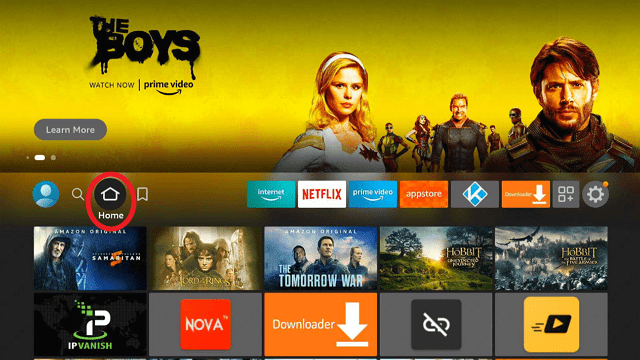
1. Go to the Home screen of your Firestick.
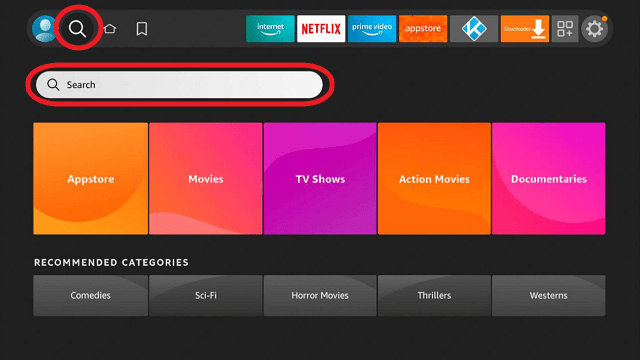
2. Navigate towards the Find tab. Press the Search button from the resulting dropdown.
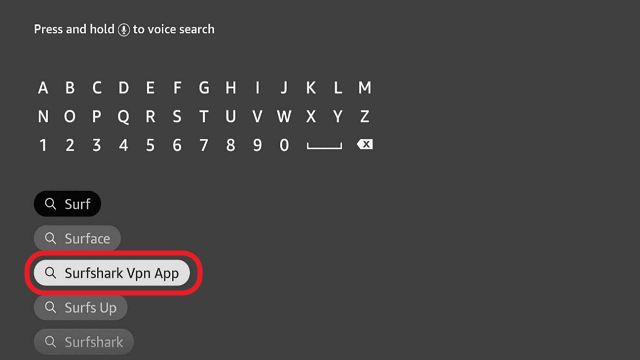
3. Type in the keyword of SurfShark and select from the suggestions that will appear.
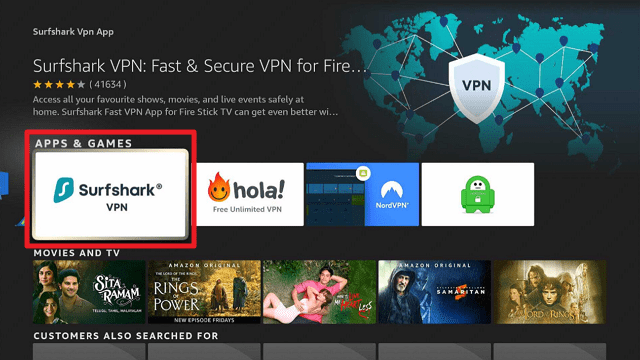
4. Click the official SurfShark icon from your search results.
5. Press the Download (You own it) button.
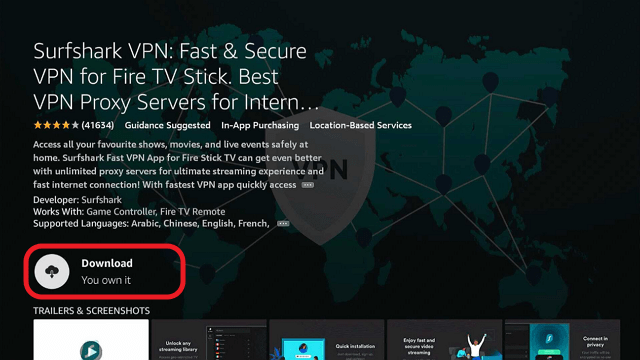
6. The SurfShark VPN installer will download on your device.
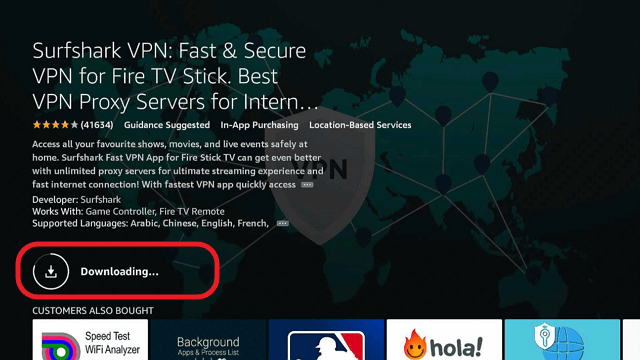
7. SurfShark VPN’s app will automatically install itself on your Fire TV stick.
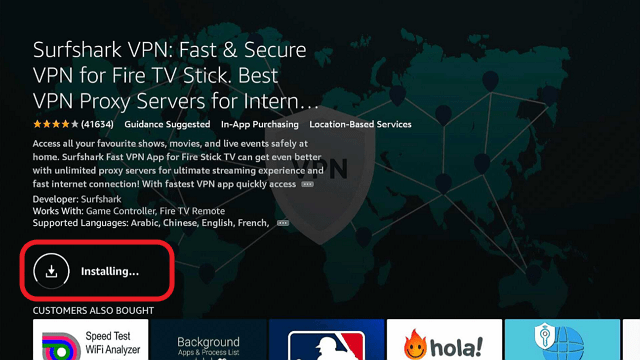
8. Press the Open button after completing SurfShark VPN’s installation process.
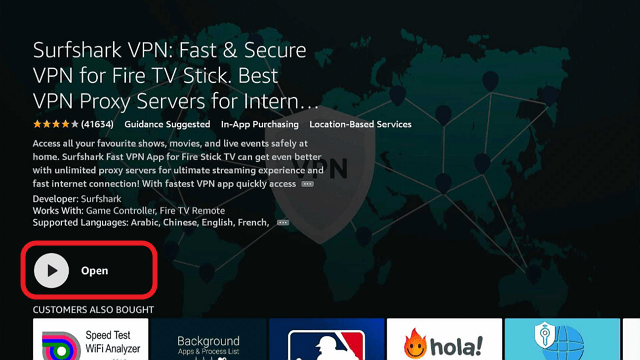
9. Please wait for the SurfShark VPN to load its user interface.
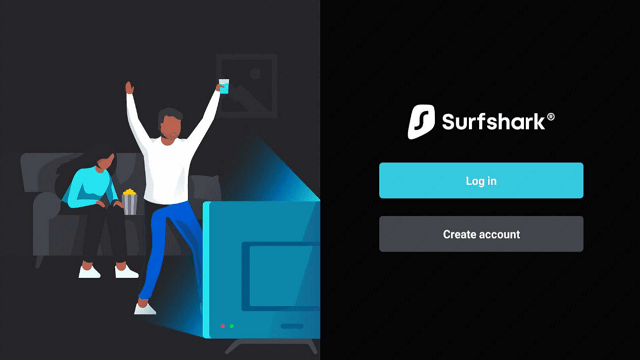
10. You can now log in with your SurfShark VPN account credentials.
Learn more about Surfshark and Grab the Best Surfshark Deal Now!
Install Surfshark on Firestick

For more VPN discounts, go to ReviewVPN Deals and purchase the best VPN for you.
Click here to get the lowest price on Surfshark through our exclusive limited-time offer.
FAQs
Are geo-blocks different from geo-restrictions?
Not at all. Geo-blocks are similar to the term geo-restrictions. It limits the ability of users to watch exclusive media content inside another country’s jurisdiction. They are short for geographical blocks or geographical restrictions.
Why do they perform geo-blocking?
Geo-blocking is common amongst top content providers. In some cases, they still do not have permission from a country to play a film or stream TV shows. Other reasons stem from legal agreements that restrict some media content inside specific territories.
Conclusion
Geo-blocks act as walls that stop us from watching movies that are restricted from viewing inside our area. These blocks are common among top content providers such as Netflix, Amazon, HBO, Hulu, etc. Either they cannot show a movie or TV show in an area, still getting the rights and permission, or have an existing contract that forbids them.
We hope this article helps you bypass geo-blocks so you can enjoy a variety of restricted media content. Thank you for reading!